Wine Cellar App
WINE CELLAR APP
Wine cellar application for wine collectors of all experience. an all-in-one PRODUCT that BRINGS the thrill and satisfaction of wine collecting.
With this application, managing and tracking your entire wine collection becomes effortless. Browse tasting notes from a community of fellow enthusiasts, share your own, and continue learning about the ever-expanding world of wine. I found that most existing cellar tracking apps are limited in scope, difficult to navigate, and prone to creating more work for the user. My vision was to change that by reducing the learning curve, eliminating common collector errors, and making wine collecting more enjoyable than ever.
WIREFRAMES
User research showed that people prefer to consume information in different ways, so building flexibility into the viewing experience was a key priority. It also became clear that collectors expect more than the basics when browsing their collection; detailed, relevant information needed to be accessible on profile screens.
List View serves as the default format. Experienced collectors tend to care less about what a label looks like and more about the details that matter — the wine's profile and when it will be ready to drink.

For collectors who prefer to browse visually, Bottle View offers an intuitive and image-forward experience. Each card features a full bottle thumbnail image, paired with the wine's name, vintage year, and storage location, making it easy to identify and locate any bottle at a glance.

One of the most distinctive features of this application is Cellar View, a visual representation of your actual storage units. Some existing apps attempt this, but often sacrifice usability or accuracy in the process. This design was built with both in mind, offering collectors a clear and precise view of the units they own. Cellar view is desktop/tablet-only by design — searching for a wine on a small mobile screen would detract from the experience rather than enhance it.

STYLE GUIDE
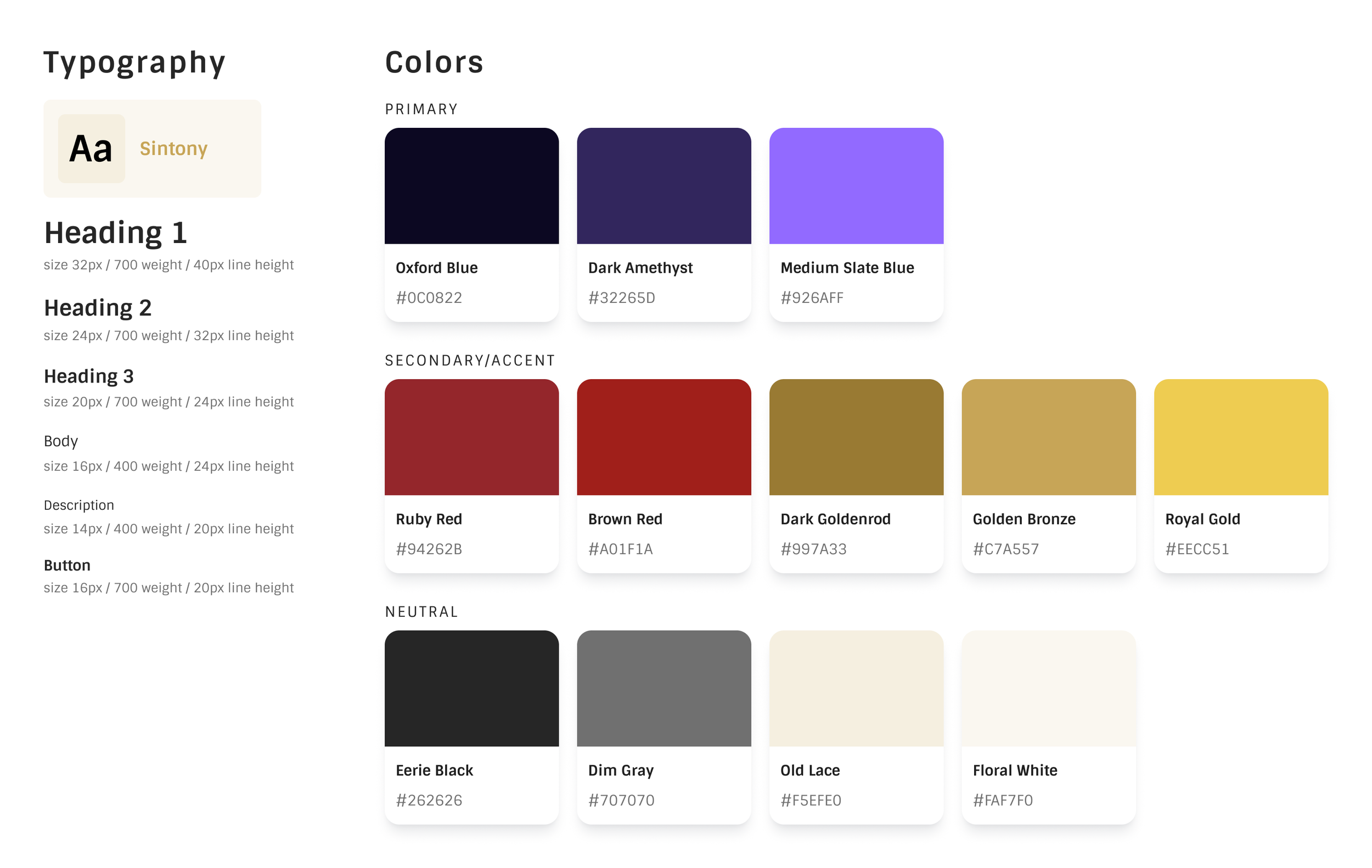
The typography is set in Sintony, a modern sans-serif typeface with a slightly square structure and smooth, refined strokes. A competitive analysis found red to be the most common primary color across wine applications. To stand apart from the crowd, purple was chosen as the primary color, supported by warm browns and red, creating a palette that feels both unique and rooted in the world of wine.